
Illness and exclusion policies: when to keep your child home from childcare
By Diego Cohen · Updated 2026-08-05
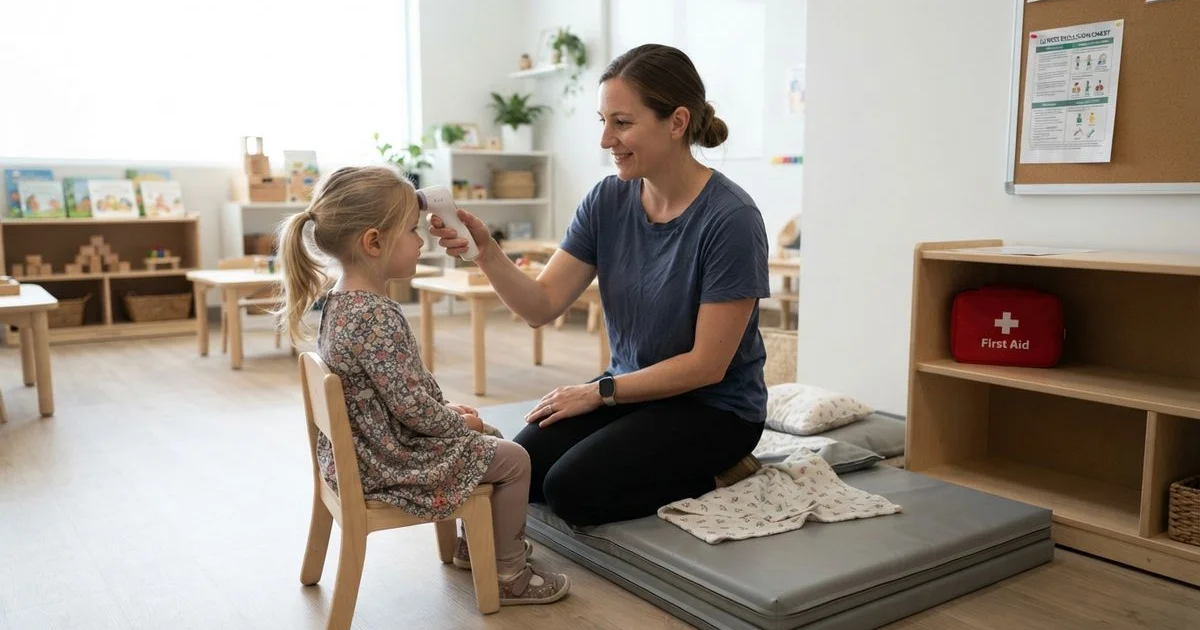
Every parent eventually faces the “is this sick enough to keep them home” decision, and childcare centres generally have clearer rules about this than it might feel like in the moment.
This is general information about how illness exclusion policies typically work, not medical advice. For guidance on a specific illness or symptom, contact your GP or a health information line.
Why exclusion periods exist
Childcare rooms are close-contact environments with young children who don’t yet have great hygiene habits, so illness spreads quickly once it’s in a room. Exclusion periods for specific contagious conditions exist to protect the other children and staff in that room, not as an arbitrary inconvenience, and most centres follow published national guidelines on minimum exclusion times for common conditions.
Common conditions and general exclusion patterns
| Condition (general pattern) | Typical guidance |
|---|---|
| Fever | Exclude until fever-free without medication for a set period |
| Gastroenteritis (vomiting/diarrhoea) | Exclude until symptom-free for a set period, often 24-48 hours |
| Conjunctivitis | Exclude until treatment has started or symptoms have cleared |
| Contagious rash illnesses | Exclusion period varies by specific condition; may need medical clearance |
These are general patterns, not exact figures, since actual exclusion periods for specific conditions are set by public health guidance and can be updated. Ask your centre for their current written policy, which should reference the relevant national guidelines.
What happens if your child gets sick during the day
Most centres monitor for fever, vomiting, and visible signs of illness throughout the day, and will call you if your child needs to be collected. Expect to be asked to pick up within a reasonable window, often within the hour, so it’s worth having a backup contact arranged for days you might not be immediately reachable. Ask your centre directly what their expected pick-up timeframe is and what happens if neither parent nor an emergency contact is reachable.

Making the borderline call
For a mild runny nose without fever and a child who seems otherwise themselves, most centres are comfortable with attendance, though every centre sets its own threshold, so ask directly rather than guessing. For anything involving fever, vomiting, or a condition with a known exclusion period, plan on keeping your child home and confirm when they can safely return, since returning too early can mean being sent home again and restarting the exclusion clock.
A backup plan reduces the stress of the call
Getting a call mid-morning that your child needs to be collected is stressful enough without also scrambling to figure out logistics. Having a plan in place ahead of time, who can pick up if you genuinely can’t leave work immediately, and where your child will go for the rest of the day, takes some of the panic out of a call you’ll almost certainly get at some point. Talk this through with a partner, family member, or trusted friend before you need it, not in the moment.
What to tell the centre about your own family’s patterns
If your child has a chronic condition that mimics exclusion-worthy symptoms, like a persistent cough from asthma rather than a contagious illness, or a skin condition that looks like a rash but isn’t infectious, let the centre know in advance with a note or letter from your GP if needed. This helps educators tell the difference quickly rather than defaulting to exclusion out of caution every time a familiar symptom appears, which saves you unnecessary days off and the centre unnecessary calls. A known food allergy needs the same kind of advance heads-up; our guide on food allergies and mealtime safety in childcare centres covers what a good allergy plan looks like.
Budgeting for sick days
Most centres bill for booked days whether or not your child attends, since the staffing and place are held either way, so illness can be a real cost consideration on top of the disruption to your day. A small number of centres offer limited exempt sick days or credits; it’s worth asking about this specifically when you enrol rather than discovering the policy the first time your child is unwell.
Our methodology explains how we score and rank centres from review and rating data, and you can browse childcare options across Deception Bay from the home page.
Frequently asked questions
- How long does my child need to stay home with a common cold?
- Most centres don't set a fixed exclusion period for a mild cold without fever, but do ask a child to stay home if they're feverish, lethargic, or unable to comfortably participate in the day. Check your specific centre's policy since practice varies.
- What illnesses have a set exclusion period?
- Conditions like gastroenteritis, conjunctivitis, and certain contagious illnesses typically have a minimum exclusion period, often until symptom-free for a set number of hours or with medical clearance depending on the condition. A centre's policy document lists their specific requirements.
- Will the centre call me if my child gets sick during the day?
- Yes, most centres will contact you if your child develops symptoms that require exclusion or seem to need attention, and expect you to arrange pick-up within a reasonable timeframe. Confirm what that expected timeframe is when you enrol.
- Do I still pay if I keep my child home sick?
- Generally yes, most centres charge for booked days regardless of attendance, since your child's place and staffing are held whether or not they attend that day. Some centres have a limited number of exempt sick days; ask about this specifically.