Food allergies and mealtime safety in childcare centres
By Diego Cohen · Updated 2026-08-06
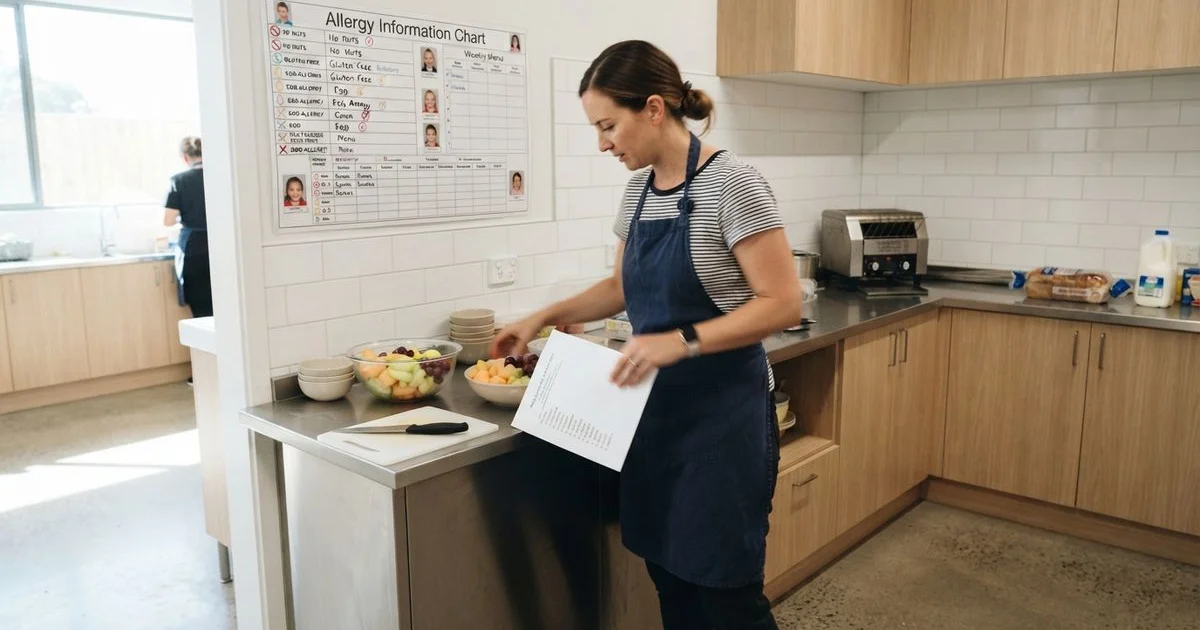
Food allergies turn an ordinary part of a childcare day, mealtime, into something that needs a genuine, specific plan rather than a general assurance. If your child has a known or suspected allergy, this is one area worth being thorough about before enrolling.
This guide covers general questions to raise with a centre and is not medical advice. Work with your child’s GP or allergy specialist to develop and update a specific management plan.
Start with a documented plan, not a conversation
A centre managing a known allergy well will want to create a specific, written plan with your input, typically informed by your child’s GP or allergy specialist, covering exactly what to avoid, what a reaction looks like for your child, and what to do if one happens. Ask to see how this plan is actually shared with the staff who prepare or serve food, not just kept in an office file, since the people handling meals day to day are the ones who need to know it.
What good mealtime safety practice includes
| What to check | Why it matters |
|---|---|
| Written, individual allergy or health plan | Ensures staff know your child’s specific needs, not a generic policy |
| Clear process for avoiding cross-contamination | Reduces accidental exposure through shared surfaces or utensils |
| Staff trained in recognising and responding to a reaction | Speeds up response time if something does happen |
| Emergency medication stored and staff trained to use it | Critical if your child has a prescribed autoinjector or similar |
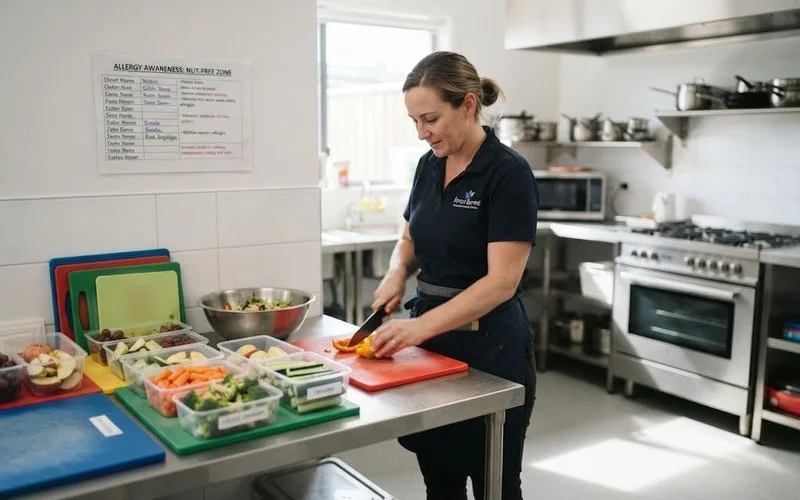
Centres in this area that prepare meals on-site with a dedicated chef are generally well placed to manage individual dietary needs directly, since they control the full ingredient list rather than relying on a pre-packaged catering menu. Ask specifically how your child’s meals would be prepared differently, if at all, from the rest of the room.
Questions worth asking directly
Ask how the centre handles a child bringing their own food if that’s necessary, including storage, labelling, and how it’s kept separate from other children’s meals. Ask what training staff have specifically for recognising an allergic reaction and administering emergency medication, and ask how recently that training was refreshed. Ask how they communicate your child’s allergy to relief or casual staff who might not know your child as well as the regular room team.
A genuine, specific answer is the good sign
A centre confident in its allergy management will describe specifics: how they label food, how they train staff, how they’d respond to a reaction, and how they keep your plan updated as your child grows. A vague answer, or one that shifts responsibility entirely onto you without a clear process on their end, is worth treating as a real caution rather than a minor gap.
The first few weeks after enrolling
Even with a solid plan on paper, the first few weeks at a new centre are worth watching closely. Ask for extra detail in daily updates about what your child actually ate and how mealtimes went, particularly if your child is old enough to be around food they can’t have, since the social pressure of wanting what other children are eating can complicate an otherwise well-managed plan. Some families find it useful to do a short settling-in visit specifically timed around a mealtime, so you can watch how the process actually works before your child’s first full day.
Talking to your child about their allergy
Depending on your child’s age, involving them in understanding their own allergy, in simple, age-appropriate terms, can add another layer of safety on top of what the centre manages. A child who can say “I can’t eat that” or point out an unfamiliar food to an educator is a genuine extra safeguard, even though the adults around them carry the primary responsibility. This isn’t a substitute for a proper centre plan, but it’s a worthwhile addition as your child gets old enough to participate in their own safety.
Keeping the plan current
Allergy management isn’t a one-time setup. Update your child’s plan whenever their allergy status changes, whether that’s a new allergy, an outgrown one, or a change in severity, and confirm the centre updates their records and staff briefing to match. A plan that’s a year out of date isn’t much better than no plan at all. Outdoor safety deserves the same ongoing attention; see our guide on sun safety and outdoor play at Queensland childcare centres for what to check there too.
Our methodology explains how we build our rankings from review and rating data, and you can browse childcare centres across Deception Bay from the home page.
Frequently asked questions
- Do childcare centres need a specific plan for a child's allergy?
- Yes, a documented individual health or risk minimisation plan is standard practice for a known allergy, developed with your input and usually your GP or specialist. Ask to see how the centre documents and shares this with staff who handle food.
- How do centres usually manage cross-contamination risk?
- Approaches vary: some centres avoid particular allergens entirely across the whole room or centre, others manage a strict separation process for an individual child's meals. Ask specifically how your child's allergen would be kept away from their food and shared surfaces.
- Can I bring my own food for my child?
- Many centres allow or require this for a child with a significant allergy, particularly if the centre can't safely guarantee an allergen-free version of a shared menu item. Confirm the centre's specific policy and any storage or labelling requirements.
- What happens if my child has a reaction while at care?
- A centre managing a known allergy should have a clear action plan, including trained staff who know how to recognise a reaction and administer emergency medication like an adrenaline autoinjector if prescribed. Confirm this plan is in place and staff are trained before your child starts.