
Staff-to-child ratios and Working with Children Checks: what Queensland requires
By Diego Cohen · Updated 2026-08-02
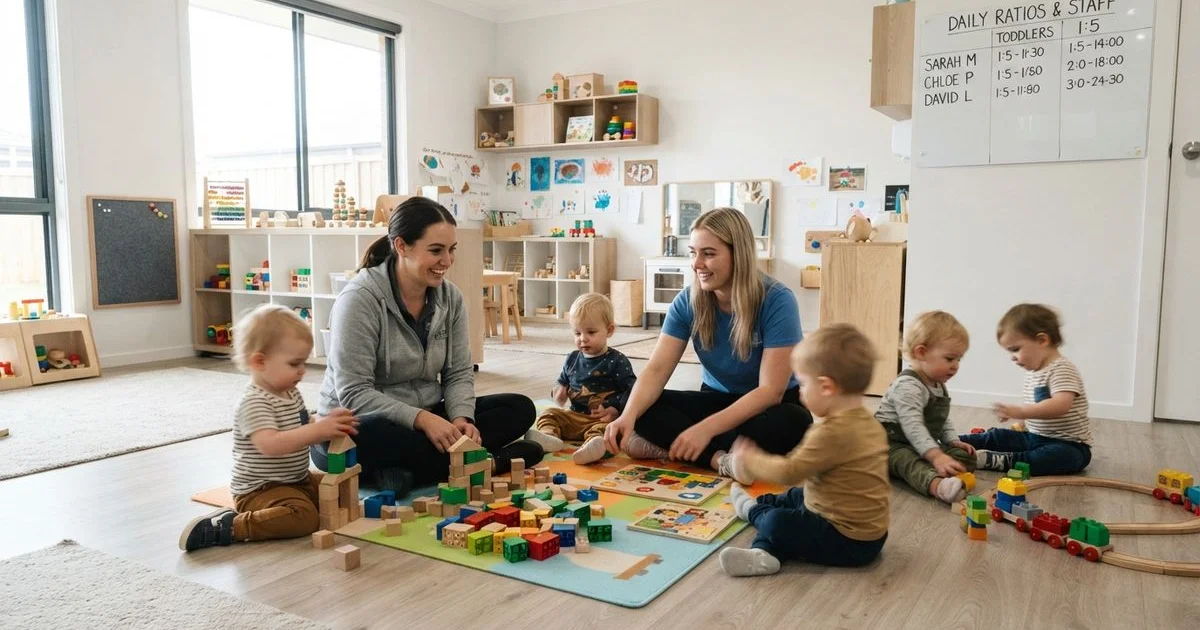
Staff-to-child ratios and background checks are two of the less visible but most important safeguards in childcare, quietly shaping how much individual attention your child actually gets and who’s allowed near them in the first place.
This is general information about how these requirements work, not legal advice. For a specific compliance question, contact Queensland’s Department of Education directly.
Why ratios matter more than they might seem to
A ratio sets the maximum number of children one educator can be responsible for at a time, and it’s tightest for the youngest children, who need the most individual supervision, feeding, and settling support, and gradually eases as children get older and more independent. This is a large part of why infant and toddler care costs more per day than older age groups: more educators are legally required per child, which is a direct staffing cost passed through to fees.
| Age group (general pattern) | Ratio tends to be |
|---|---|
| Infants | Most educators required per child |
| Toddlers | Fewer educators required per child than infants |
| Kindergarten age | Fewest educators required per child |
Exact ratio numbers are set in regulation and can differ slightly by state, so treat this as a general pattern rather than a specific figure, and ask a centre directly what ratio applies to your child’s room.
What a Working with Children Check actually confirms
In Queensland, this is the Blue Card system, and it applies to anyone working directly with children in regulated care, as well as many people regularly on-site in supporting roles. It’s a background check against criminal history and other relevant records, renewed periodically rather than a one-time check that lasts forever. A valid Blue Card tells you someone has cleared this screening, not that they’re necessarily a skilled or warm educator, so it’s one safeguard among several, not the whole picture.
Ask a centre how they verify Blue Cards are current for their whole team, including casual and relief staff, not just permanent educators. A centre with a clear, confident answer to this is generally a good sign of solid administrative practice more broadly.

What you can observe on a visit
You can get a rough sense of whether a room seems adequately staffed simply by counting educators against children during a tour, though be aware that headcounts shift through the day as children arrive, leave, or move between activities, so one snapshot isn’t definitive. A room that consistently feels stretched, with one educator managing more children than seems reasonable for their age, is worth asking about directly.
Why staff turnover matters alongside ratios
A centre can meet its ratio requirement on paper and still have a genuine consistency problem if educators come and go frequently. High turnover means your child is regularly settling with unfamiliar faces, and it can also signal underlying issues, like poor working conditions or management, that are worth asking about even though they aren’t something a regulator directly measures. Ask a centre how long their core educators have generally been there, since a team with real longevity is often a stronger day-to-day signal than ratio compliance alone.
How this connects to what you pay
Because ratios are set by regulation and staffing is the largest cost in running a childcare service, a centre genuinely meeting or exceeding its ratio requirements, particularly in the more expensive infant and toddler rooms, has a real cost to carry. This is one honest reason fees vary between centres: a service running tighter, better-resourced ratios than the bare minimum is generally passing that cost through rather than cutting corners.
If something doesn’t add up
If you have a specific, ongoing concern about ratios or staffing at a centre your child attends, you can raise it directly with the centre first, and escalate to Queensland’s Department of Education if it isn’t resolved. Genuine short-staffing that regularly breaches ratio requirements is a real compliance issue, not just an inconvenience, and the regulator’s role is specifically to follow up on reports like this. If understaffing ever leads to an actual injury, our guide on who is liable if your child is injured at childcare explains what a centre is required to do next.
Understanding ratios and background checks won’t tell you everything about a centre’s quality, but they’re a meaningful, checkable floor. Our methodology explains how we build our rankings from review and rating data, and you can browse centres across Deception Bay from the home page.
Frequently asked questions
- Do ratios get less strict as children get older?
- Yes, in general. Younger age groups, particularly infants, require more educators per child, while ratios ease for toddlers and ease further again for kindergarten-age children, reflecting the different supervision needs at each stage.
- Does every staff member need a Working with Children Check?
- Anyone working directly with children in a childcare setting, and often anyone regularly on-site even in a non-teaching role, needs a valid check under Queensland's Blue Card system. Ask a centre how they verify and keep this current for their team.
- Can a centre operate above its allowed ratio during a busy period?
- No, ratios are a legal minimum requirement, not a target to be flexible with when convenient. A centre consistently short-staffed relative to its ratio requirement is operating outside the rules, which is worth raising directly.
- How would I know if a centre is meeting its ratios?
- You can generally observe this on a visit by counting educators against children in a room, though headcounts shift through the day. If you have a specific concern, you can also raise it directly with Queensland's regulator.