
Dealing with separation anxiety when starting childcare
By Diego Cohen · Updated 2026-07-21
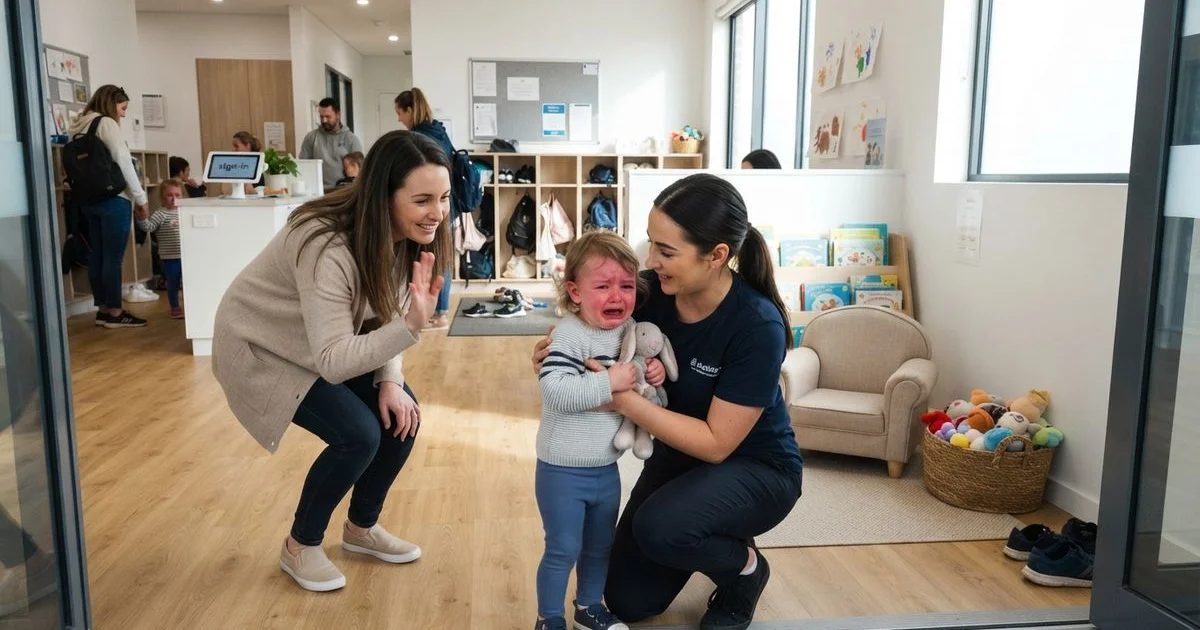
Separation anxiety at drop-off is one of the most common reasons parents second-guess starting childcare, and it’s also one of the most normal parts of the process. Understanding why it happens, and what actually helps, makes the first few weeks easier for both of you.
Why it happens
Separation anxiety is a typical developmental stage, often peaking somewhere between eight months and three years, though every child’s timeline is different. It reflects a child’s growing awareness that a parent leaving means genuinely being apart, not confusion or a sign that something is wrong with the childcare arrangement. It can show up even with an excellent centre and warm, experienced educators, so a tearful drop-off on its own doesn’t tell you much about fit. If you’re timing the start of care around a return to work, our guide on building a childcare timeline after parental leave covers how to plan the start date itself.
What tends to help
A short, clear, predictable goodbye generally works better than a long one. Explaining what’s happening in simple terms, naming when you’ll be back in terms your child understands like “after nap time,” and then leaving promptly tends to build trust faster than lingering or repeatedly returning for one more hug. Sneaking away without saying goodbye can feel easier in the moment but often backfires, since a child who can’t predict when a parent might disappear can become more anxious over time, not less.
Consistency in the drop-off routine itself helps too. The same order of events each morning, whether that’s a particular song, a specific handover to a particular educator, or a small ritual like waving through a window, gives a child a predictable structure to hold onto during an unpredictable moment.
What a good centre does on their end
Ask your child’s educators what their specific settling-in strategy looks like, not just a general reassurance that “kids settle eventually.” A strong answer usually includes a specific activity or approach they use to redirect and comfort a child in the first few minutes, and a clear sense of how long they’d typically expect settling to take before flagging a concern to you.
| Sign | What it usually means |
|---|---|
| Crying at drop-off, calm within 10-15 minutes | Typical and expected |
| Distress that continues through much of the day | Worth a direct conversation with educators |
| Gradually shorter, less intense goodbyes over 1-2 weeks | Settling is progressing normally |
| No improvement after several weeks of consistent routine | Worth reassessing fit or approach together with the centre |
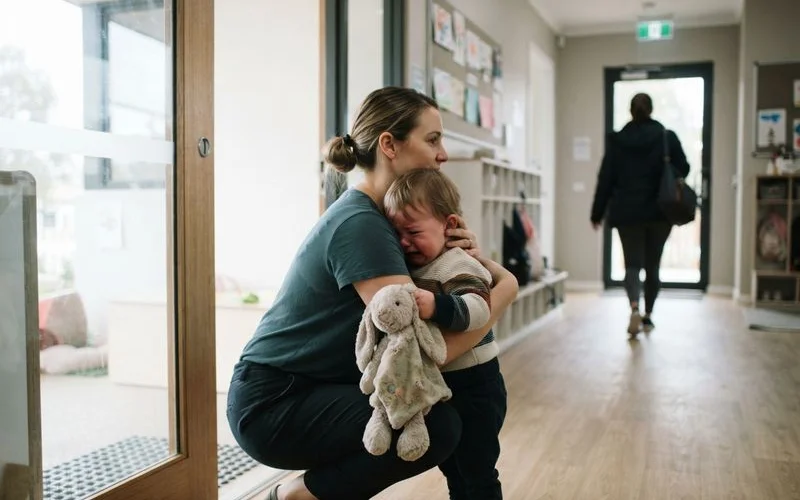
It can resurface later, not just at the start
Separation anxiety isn’t always a one-time hurdle at the very beginning of care. It can resurface after a break, a holiday, an illness that kept your child home for a stretch, or a change in the room like a new educator or a move up to a new age group. If a previously settled child suddenly starts struggling at drop-off again, treat it the same way you did the first time: short, consistent goodbyes, patience, and a check-in with educators about what they’re noticing during the day.
What not to do, even with good intentions
Bribing your child with a treat for a calm drop-off, or making a big, drawn-out promise about what you’ll do together later, can unintentionally signal that today’s goodbye is a bigger deal than it needs to be. Similarly, showing your own visible anxiety at drop-off, even unintentionally, tends to transfer to your child. None of this means you’re doing it wrong if you’ve done these things; it’s simply worth knowing what tends to help versus what tends to prolong the adjustment, so you can adjust your approach without guilt.
When to look more closely at fit
Most separation anxiety eases with time and a consistent routine. It’s worth a closer look if your child seems distressed well beyond the drop-off window itself, if educators can’t describe any specific strategy they’re using, or if your own gut sense says something feels off beyond typical settling difficulty. Trust that instinct alongside the practical signs above rather than dismissing it because “this is supposed to be normal.”
This guide offers general, practical suggestions and isn’t a substitute for advice from a paediatrician or early childhood professional if you have specific concerns about your child’s wellbeing or development.
Our methodology explains how we build our centre rankings from parent reviews, and you can browse childcare options across Deception Bay from the home page.
Frequently asked questions
- Is it normal for my child to cry every drop-off for weeks?
- Some children settle within days, others take a few weeks of consistent routine before drop-offs stop being difficult. If crying is prolonged well beyond that, or your child seems distressed for the whole day rather than just at the goodbye, it's worth a direct conversation with the room's educators.
- Should I sneak out to avoid a scene?
- Most early childhood professionals recommend against it. A short, clear goodbye that your child can see and understand tends to build more trust over time than disappearing, even though a visible goodbye can mean a harder few minutes upfront.
- Does separation anxiety mean the centre is a bad fit?
- Not on its own. Separation anxiety is a normal developmental stage that shows up regardless of how good the centre is. It's worth reconsidering fit if your child seems distressed well beyond drop-off, or if educators can't offer any specific strategy to help.
- What can I do at home to help?
- Keep goodbyes short and consistent, talk positively about childcare in the days before starting, and consider a practice run like a shorter settling-in visit if the centre offers one. A predictable routine at drop-off, in the same order each day, also helps many children feel more secure.