
Family day care vs centre-based care: how the day-to-day differs
By Diego Cohen · Updated 2026-07-22
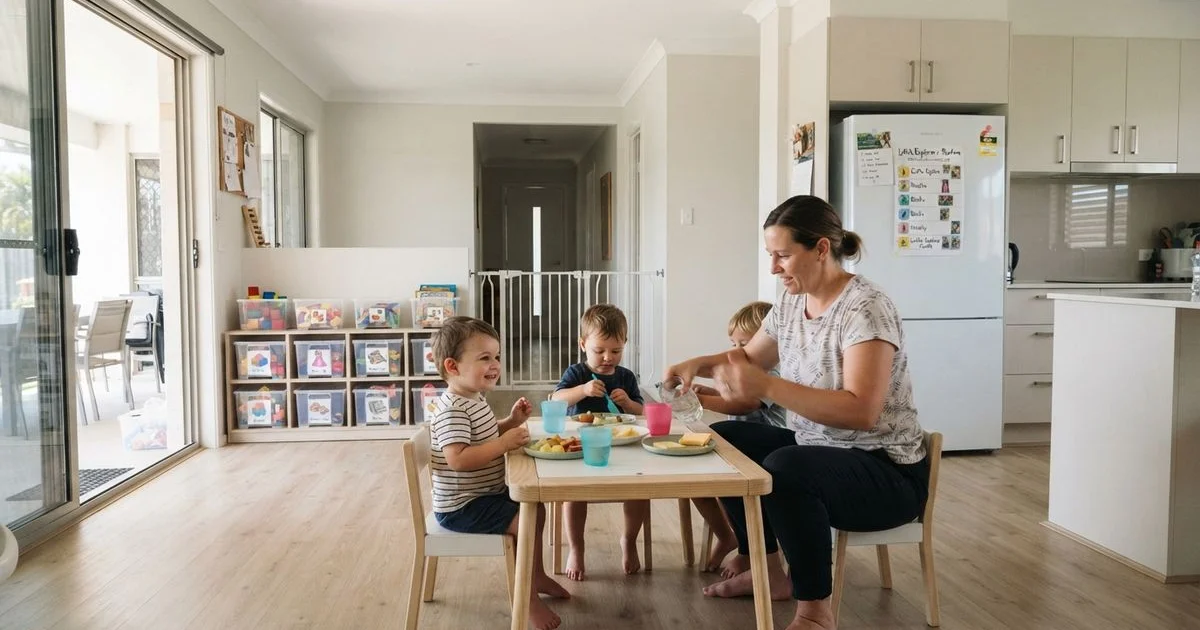
Choosing between family day care and a centre-based long day care room often comes down to picturing what an actual day looks like for your child, not just comparing brochures. Both deliver an approved early learning program, but the daily rhythm and setting are genuinely different.
A typical day in each setting
A centre-based long day care room usually runs on a more visible, structured timetable: set blocks for free play, group activities, outdoor time, meals, and rest, often displayed on a board near the entrance. Staffing is rostered across a team, so your child interacts with a small group of consistent educators within that room, plus occasional relief staff.
Family day care happens in the educator’s home, with a small, often mixed-age group. The day tends to flow more informally around the same core elements, meals, outdoor play, rest, and educational activities, but scheduled with more flexibility than a centre’s fixed timetable. Your child is cared for primarily by one educator rather than a rotating team, which some families see as an advantage for consistency and others see as a risk if that one person is unavailable.
| Aspect | Centre-based long day care | Family day care |
|---|---|---|
| Group size | Larger, single age band | Smaller, often mixed ages |
| Staffing | Team of educators, rostered | Usually one primary educator |
| Setting | Purpose-built centre | Educator’s home |
| Daily structure | Fixed, visible timetable | Flexible, similar core elements |
| Backup if carer is unavailable | Other staff cover the room | Depends on the scheme’s backup arrangements |
What each setting suits well
A centre with a full team and dedicated age-based rooms can offer more resources, structured curriculum activities, and continuity of care even when one educator is sick or on leave. This suits families who want predictability and a larger peer group for their child.
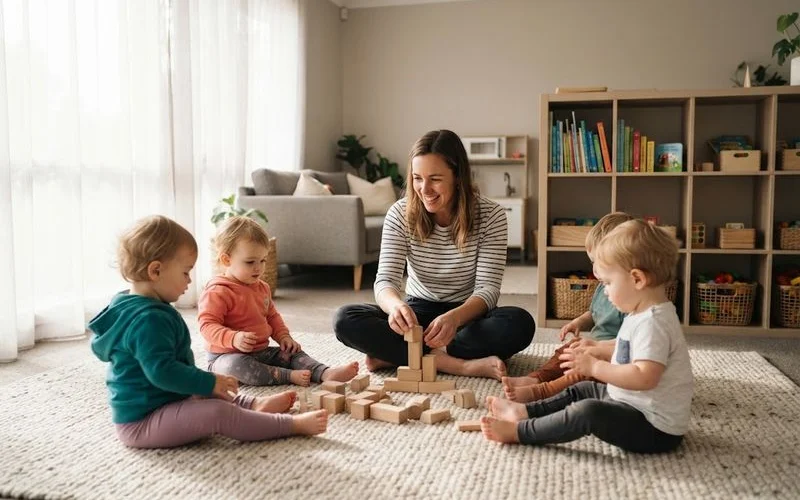
A family day care setting suits families who want a smaller, more home-like environment, more flexible booking patterns since educators often set their own minimum days, and a mixed-age group that can work well for siblings being cared for together or a child who does better in smaller settings. The tradeoff is a heavier reliance on one person, so ask directly what backup care looks like if your educator is unavailable.
Questions to ask that reveal the real day-to-day
Ask to see (or hear described in detail) what a typical day actually looks like, hour by hour, rather than a general description. Ask a family day care educator what happens on their sick days or during their own leave, and ask a centre what their staff-to-child ratio and rostering actually looks like on a normal day versus a short-staffed one. Both questions cut past marketing language to the practical reality your child will experience. Whichever setting you choose, our guide on what to expect on your child’s first day of long day care walks through the drop-off and settling process in more detail.
Cost and paperwork differences worth knowing
Both types are eligible for the Child Care Subsidy in the same way, so the funding mechanics aren’t a reason to prefer one over the other. Where they do differ is in how fees are set: a centre publishes one rate that applies to everyone in a room, while a family day care educator sets their own hourly or daily rate, which means it’s worth getting an actual quote rather than assuming one type is cheaper by default. Enrolment paperwork is broadly similar for both, though a family day care scheme may involve a coordinating service that manages some administrative steps on the educator’s behalf, which is worth understanding before you sign up.
Fit over format
Neither setting is objectively better; they suit different children and different family circumstances. A shy child who finds a large room overwhelming might settle faster in a small family day care group, while a child who thrives on structure and a wide range of activities might do better in a well-resourced centre. If you’re genuinely torn, a settling-in visit at each is worth the time before you commit.
Our family day care category page lists local educators in Deception Bay, and our methodology explains how we score and rank providers from review data. Browse other care types from the home page.
Frequently asked questions
- Is the daily routine less structured in family day care?
- It's usually less formally scheduled but still follows an approved early learning framework, so there's a documented educational program even though the day may flow more informally than a centre with fixed timetabled blocks.
- How many children are typically in a family day care group?
- This is regulated and varies by the ages of the children in the group, but it's generally a small number, often a mixed-age group rather than the larger, single-age-band rooms typical of centre-based care.
- Do family day care educators take holidays?
- Yes, and unlike a centre with a full staff roster, an educator's leave can mean no care is available on those days unless a backup arrangement exists. Ask about this directly before enrolling if reliable year-round care matters to you.
- Which is better for a child who gets overwhelmed in large groups?
- Family day care's smaller, mixed-age setting can suit a child who finds a large, busy centre room overstimulating, though every child is different and it's worth trialling a settling-in visit at either option if you're unsure.